
Review recovery potential
Compare loose and briquetted feedstock in the context of your own melting operation. Establish results with your team rather than relying on a universal melt-yield percentage.
Prepare metal chips for the next stage of your melting process.
FOUNDRIES & METAL CASTING
Loose chips and turnings can be difficult to store, move, and introduce into a charging process. Briquetting consolidates that material into a dense form for evaluation against your foundry’s feedstock and handling requirements.
Less exposed surface area can help reduce oxidation and slag formation during remelting. The result depends on the alloy, material condition, briquette characteristics, and melting process. ARS works with your team to assess the preparation equipment around those needs.
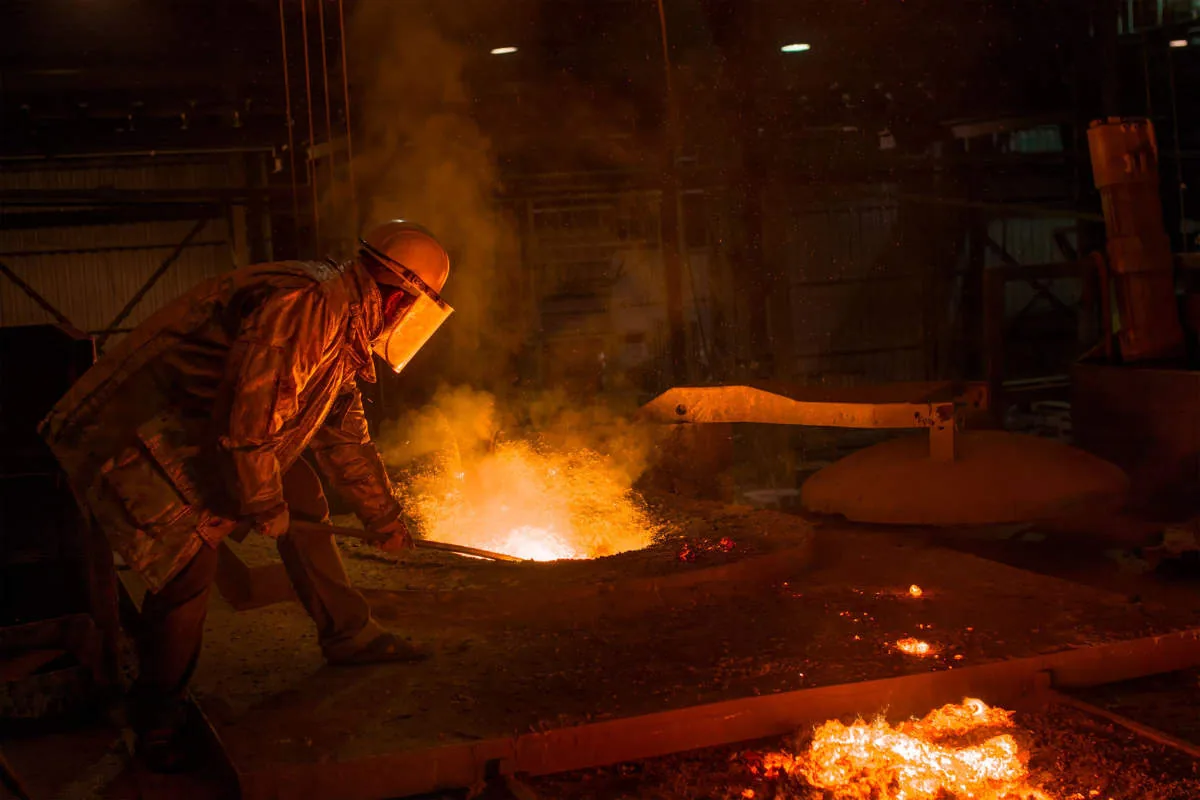
WHERE RECOVERY CAN HELP
A published machine capacity is a starting point. Your foundry’s material and charging requirements shape the final equipment choice.
Compare loose and briquetted feedstock in the context of your own melting operation. Establish results with your team rather than relying on a universal melt-yield percentage.
Consider briquette size, density, and integrity alongside how the material will be stored, transported, and charged.
Review material supply, operating hours, and the rate required to support downstream operations. Select supporting equipment around the same production plan.
PLAN THE COMPLETE PROCESS
Identify the alloy, chip form, contamination, fluid content, and input density. Keep the foundry’s feedstock acceptance requirements part of the discussion.
Use sample testing to assess compaction and the required output characteristics. Coordinate feedstock suitability and charging requirements with the foundry team.
Plan infeed, discharge, collection, and movement to the next stage. Layout and equipment selection need to fit the actual charging and production arrangements.
EQUIPMENT TO EXPLORE
Use these pages to compare equipment and prepare a more focused conversation with the ARS team.
Compare the higher-capacity range, stated material capacities, and representative layout drawings.
Explore Foundry SeriesConnect preparation, conveying, briquetting, and fluid handling around the application.
Explore Complete chip systemsReview the equipment needed to collect, feed, and move material through the system.
Explore Material handlingMAKE THE CONVERSATION PRACTICAL
Tell ARS about your material, production needs, and recovery goals. We can help evaluate an individual machine or a connected system.
Talk with ARSAPPLICATION QUESTIONS
No single figure applies to every operation. Alloy, material condition, briquette properties, and melting practice affect recovery. Evaluate results for your own process rather than treating older example percentages as a guarantee.
Start with material characteristics, required production rate, and the output your process needs. Compare the catalog specifications, then discuss sample testing and equipment selection with ARS.
Suitability still needs to be established for the material and foundry process. Coordinate fluid condition, feedstock acceptance, and charging requirements with your foundry team; compaction alone does not establish acceptance.